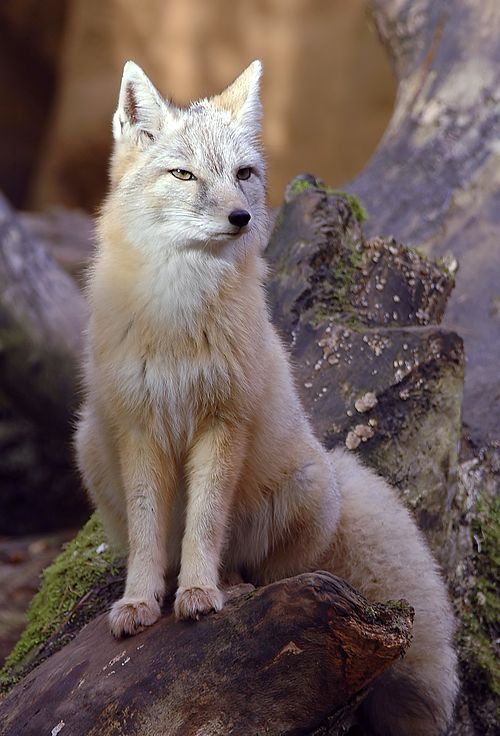
Species: Vulpes Corsac
Genus: Vulpes
Conservation Status: Least Concern
General Overview
The corsac fox (Vulpes corsac), is a medium-sized fox found in steppes, semi-deserts, and deserts in Central Asia, ranging into Mongolia and northern China. It is classified as least concern by IUCN; although populations can fluctuate, sometimes dripping tenfold within a single year.
Description
The corsac fox is a medium-sized fox. Its head and body length range from 18-26 inches, and its tail is between 7.5-13.8 inches long. Adults weigh from 1.6 to 3.2 kilograms. It has grey to yellowish fur over most of its body, with paler underparts and pale markings on its mouth, chin, and throat. During the winter, its coat becomes much thicker and silkier in texture, and turns greyish in colour, with a dark line running along its back. The closest related species to the corsac fox is the Tibetan sand fox.
Compared with other foxes, it has small teeth and a wide skull. It has been claimed that this species is able to climb trees, and has even been domesticated in the past. The corsac fox is reported to have good eyesight and an acute sense of smell. They also possess several scent glands which produce pungent odours, but not as extreme as other Vulpes species.
Corsac foxes are reported to bark during hunting and when threatening rivals. They yse higher pitch yelps and chirps as alarm calls or social greetings.
Distribution and Habitat
Corsac foxes are found throughout Kazakhstan, Uzbekistan, Turkmenistan, Iran, Tajikistan, Kyrgyzstan, Afghanistan, China and Russia. There are three recognised subspecies:
- Vulpes corsac corsac – northern Kazakhstan, southern Siberia
- V. c. kalmykorum – northern Uzbekistan, Caucasus
- V. c. turkmenicus – southern Uzbekistan, Turkmenistan, China, Mongolia, and neighbouring regions
These foxes inhabit open grassy steppes and semideserts. They prefer to avoid dense vegetation and mountainous regions, as well as true deserts with drifting sands, and snowfields more than 6 inches deep. They also tend to stay far away from humans.
Ecology and Behaviour
Corsac foxes can forego food and water for extended periods of time, as an adaptation to the arid climates they face. This fox is an opportunistic forager and hunter, and their diet varies throughout its range. It typically consists of small- to medium-sized vertebrates, insects and small rodents such as voles, gerbils, jerboas, hamsters and ground squirrels. The corsac fox scavenges for carrion and human refuse as well. They are predominantly carnivorous, but will occasionally eat fruits and vegetation, particularly during winter when availability of animal prey is low.
Natural predators of the corsac fox include the gray wolf, Eurasian eagle-owl, and golden eagles.
The corsac fox is a nocturnal and nomadic hunter of the steppes. The fox does not have a defended territory, and unlike other foxes, will sometimes form packs. Corsac foxes cannot hunt deep in snow; it instead shelters in dens during the harsh winter, or, in the northern parts of its range, it migrates up to 370 miles south in the winter. They dig their own dens, which are generally shallow. However, they also take over the burrows of other animals such as ground squirrels or badgers. These dens may have several entrances, but are usually less than 4 ft deep. The burrow is shared between social packs with several dens and connecting holes, sometimes being referred to as “corsac cities”. Corsac foxes are adept at climbing, although they are quite slow, and can be easily outrun by a dog.
Reproduction
The mating season begins in January and ends in March. Eventually, males and females establish a monogamous bond, and both assist in raising their young. The mother initially creates a birthing den, this is sometimes shared with other pregnant females, but the young are moved to new burrows several times after they are born.
Generally, two to six young are born after a gestation period of 52 to 60 days. Cases of ten kits being born in a single litter have also been reported. Newborn kits weigh around 60 g, and have fluffy, light brown fur that turns yellowish as they age. They are born blind and open their eyes at around two weeks of age; they begin eating meat at four weeks and emerge from the den shortly after. Corsac foxes reach sexual maturity within 9 to 10 months and reproduce in the second year of life. They live up to 9 years in the wild.
Threats
The biggest threat to the corsac fox is poaching; humans have harvested their fur since the Bronze Age. Furthermore, they are a slow runner and easily caught by hunters. They are also hunted by trained domestic dogs, saker falcons and golden eagles. The corsac fox is also threatened by overgrazing and landscape development, as well as natural disasters. At times, their population can drop by 90% in certain areas, although it recovers quickly. It is classed by the IUCN as least concern.

