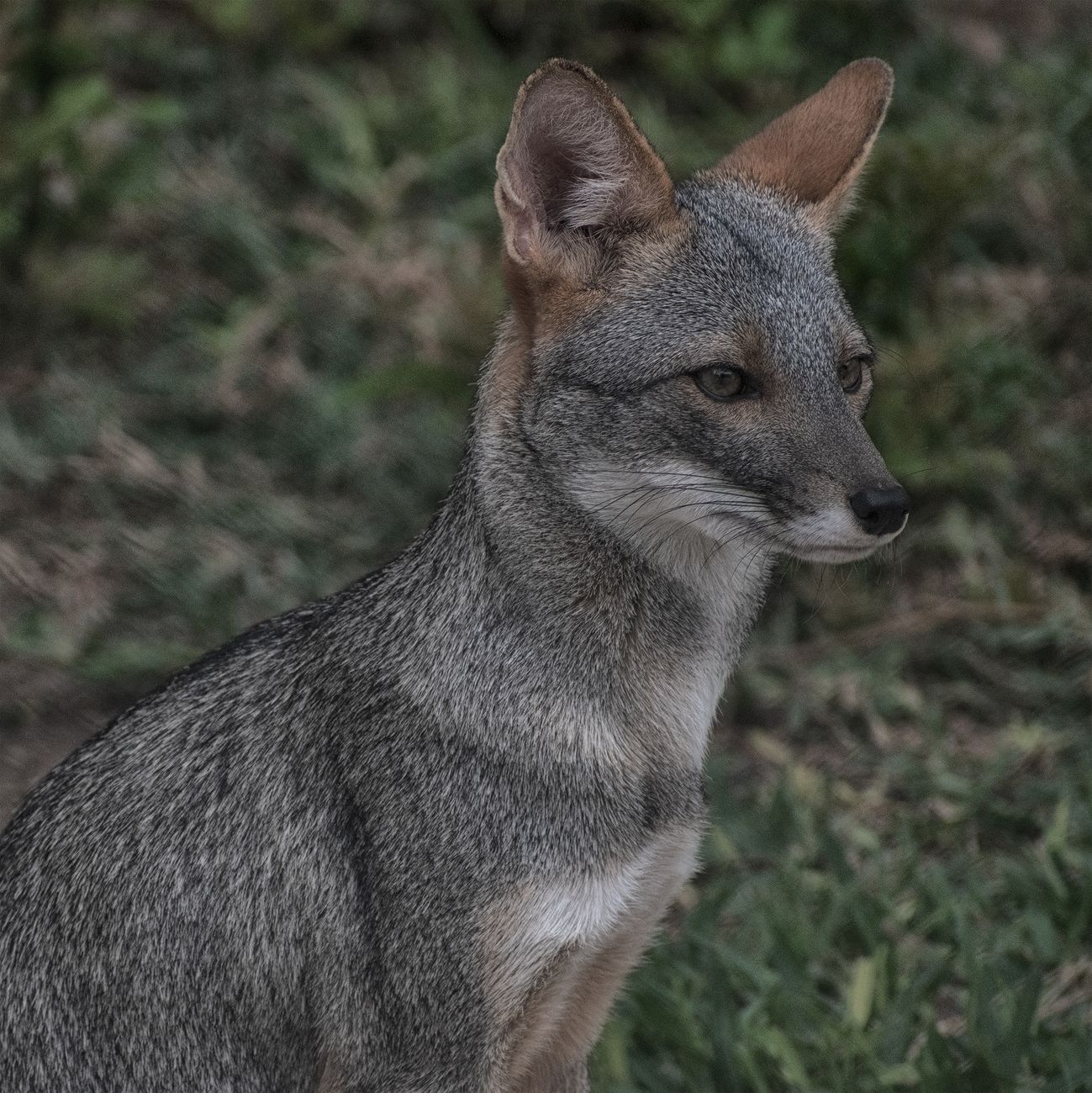
Species: Lycalopex Griseus
Genus: Lycalopex
Conservation Status: Least Concern
General Overview
The South American grey fox is a South American species of Lycalopex, and it is endemic to the southern parts of Argentina and Chile, primarily Patagonia.
Description
The South American grey fox is a small fox-like canid, weighing between 2.5 and 5.5 kg, as well as measuring between 65 and 110 cm. They have a reddish brown head flecked with white, large ears, and a distinct black spot on their chin. The underparts are pale grey, and their long bushy tail has a dark dorsal stripe and dark tip.
Range and Habitat
The South American grey fox is found in Argentina and Chile, comprising stripes on both sides of the Andes mountains. They occur in a variety of habitats, from the warm, arid scrublands of the Argentine uplands and the cold, arid Patagonian steppe to the forests of southernmost Chile.
Diet
The diet varies in different parts of its range and different times of the year, it consists mainly of mammals, birds, arthropods and bird eggs. The main prey items seem to be small mammals, especially rodents.
Reproduction
The South American grey fox breeds in early austral autumn, around March. After a gestation period of two months, two to four kits are born in a den. Not much else is recorded about its lifestyle.
Interaction with the environment
In urban settings, the fox is a largely solitary animal which has long been hunted for its pelt. The fox will sometimes go near human habitations in search of food such as chickens and sheep, although they tend to avoid areas visited by dogs. They are useful in their role as scavengers of carrion and dispersers of seeds of the fruit they eat.
In the country, the ranges of the South American grey fox can overlap with the larger Culpeo. The former consumes a greater proportion of rodents, and arthropods make a significant portion of its diet, while the culpeo tends to consume larger prey, including the non-native European hare which has been introduced into Chile. These prey animals are partitioned between these two species, with the gray fox being excluded from the best prey territories by the larger culpeo.

